
The Long Decline of Nantucket
The WhaleThis flow follows Nantucket’s rise as a whaling center and its retreat when geography, markets, fire, and war undo its prosperity.
increasing Bearing strength in each event
 decreasing
Bearing strength in each eventdecreasingA Settlement’s Opportunity
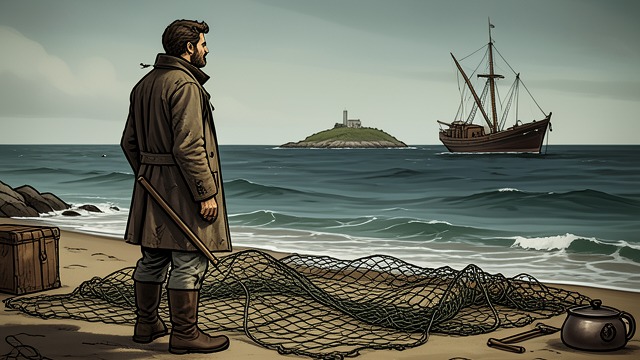
A Remote Island
An isolated community
Nantucket’s position and limited resources make the sea central to its livelihood. Indigenous whaling knowledge and local observation help settlers recognize the potential of whales in nearby waters.
A trade takes root
Whaling becomes an economic foundation and a source of shared civic identity. The island’s remoteness helps shape a community oriented toward ships, risk, and the wider ocean.
The Sperm Whale Crown
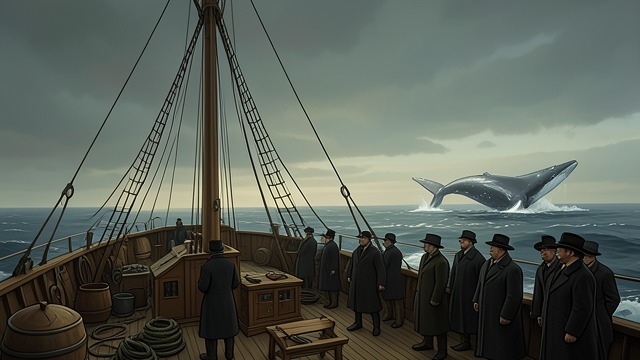
A More Profitable Target
The offshore hunt
The discovery of sperm whales expands the island’s reach beyond coastal grounds. Their valuable oil supports increasingly ambitious voyages.
A claim to supremacy
Nantucket’s whalers imagine their work as a heroic conquest of the ocean. That pride obscures the cost to the animals and the crews sent after them.
A Fortune in Oil
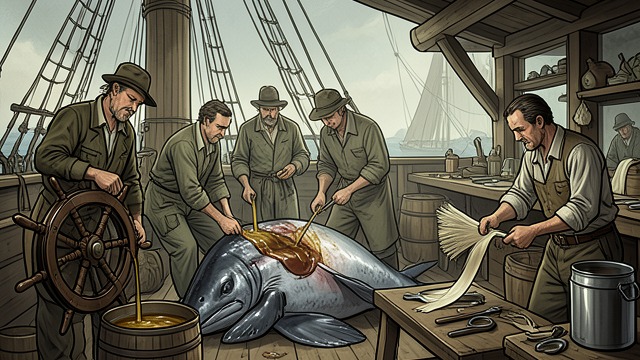
The Whaling Economy
Industry at home
Shipboard processing, candle making, and related trades turn whale products into wealth. Quaker families and other island businesses build fortunes from oil and baleen.
A divided prosperity
The island’s prosperity depends on dangerous labour and the extraction of living animals. Wealth, social order, and religious identity coexist with a violent commercial system.
Fire and New Competition
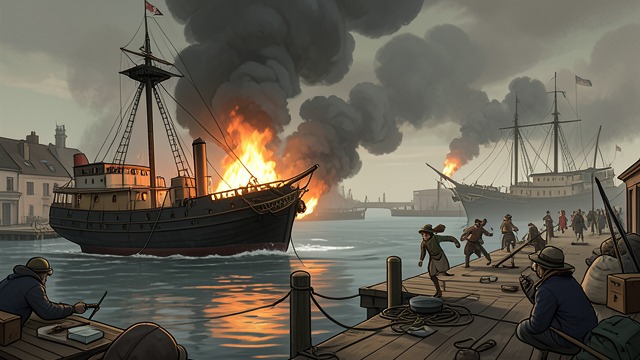
The Island Loses Ground
A harbour problem
Larger ships struggle with Nantucket’s shallow, silting harbour, while New Bedford offers easier access. Business and residents increasingly move to the mainland port.
A town in flames
A major fire destroys a substantial share of Nantucket’s businesses. The blow deepens the island’s economic vulnerability at a moment when its old advantages are already fading.
The End of the Fleet
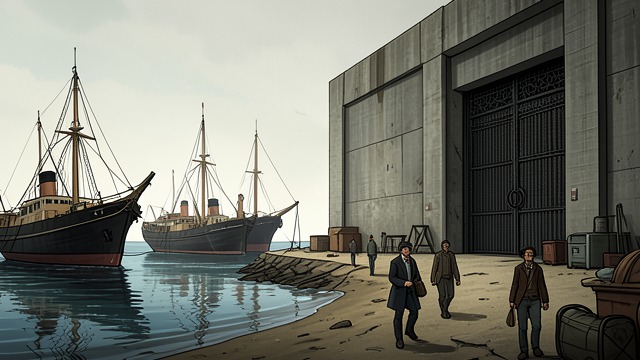
A Trade Abandoned
New attractions and fuels
Young people leave for the California Gold Rush, while petroleum and coal gas weaken demand for whale oil. Nantucket’s industry loses workers, markets, and its reason for expansion.
A final departure
War further damages the whaling fleet, and the last ship leaves Nantucket in 1869. The island’s old commercial world gives way to quiet streets and a preserved maritime memory.
After Nantucket’s settlement in the seventeenth century
In 1712 and the decades that followed
During Nantucket’s eighteenth- and early nineteenth-century prosperity
From the 1840s into 1848
From the California Gold Rush through 1869
